 Ages 6–10 years
Miles and the Big Red Feeling
When frustration feels immediate and intense, Miles explores taking a pause before responding.
Explore This Story Join Story Club
Big Feelings
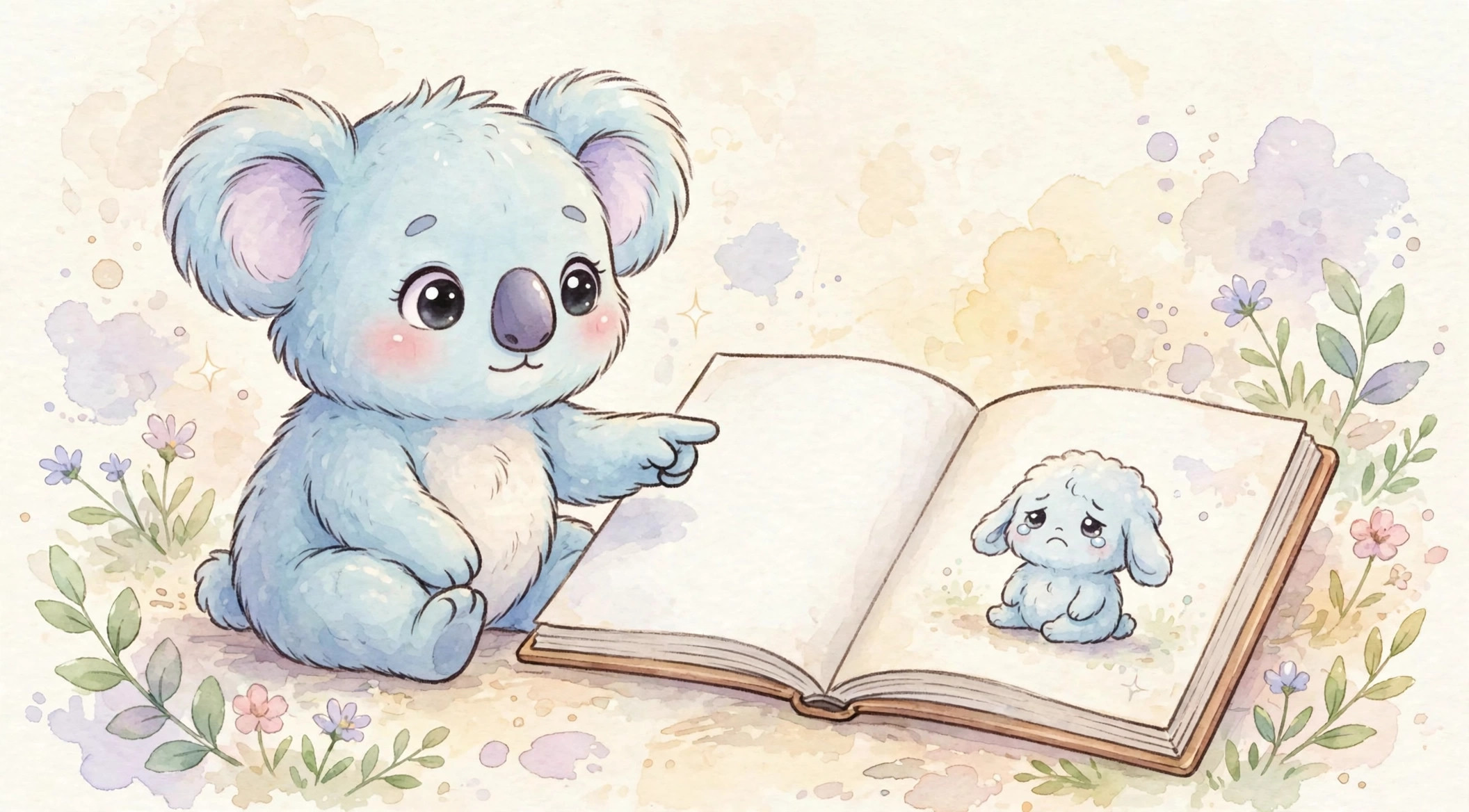
Halfway through the story, your child goes quiet at the sad page. Or bursts into tears. Or asks for the same page five times. Or shouts advice at the character.
Storytime stirs feelings — that is not the story going wrong. That is the story working. A picture book is one of the safest places a big feeling can happen: it arrives inside a story, next to a trusted adult, with a last page that promises an ending. The question is not how to keep feelings out of storytime. It is how to make room for them when they come.
Start with the character, not your child. Ask "What do you notice?" and let them talk, point, draw, or pass. A feeling named through a character is a feeling a child can hold — and the practice transfers to their own feelings later.
A story offers a little distance. Instead of asking a child to explain their own difficult day, begin with something visible: a face in an illustration, a pause in the action, or a choice the character makes. "What do you notice?" leaves room for the child's interpretation. If their answer differs from yours, you can stay curious rather than correcting it.
Asking "Why are you sad?" puts a child on the spot, in the middle of the feeling, with no words ready. Asking about the character gives them a safer distance: "What do you notice about her face?" Whatever they say is information, not a test with a right answer. If they call a crying face "happy", stay curious — "Tell me more" — rather than correcting the label. The goal is not the correct word. The goal is the conversation, and children practise naming feelings on characters long before they can name their own.
Some readers want to talk; others point, draw or listen. Offer two simple possibilities, such as "Would you like to tell me or draw it?" and make passing a real option. A reading session does not need to become a lesson about the child. Returning to the same picture another day can be enough.
Some children talk feelings out. Others point, act them out with toys, or go completely quiet. All of those are answers. Offer two doors — "Tell me, or draw it?" — and make passing a real third door: "Or we can just turn the page." A child who is allowed to pass tonight is a child who might talk tomorrow. And the same page, revisited next week, often opens what it could not open tonight. Feelings keep their own timetable; storytime just needs to keep the door open.
Try "Who could help this character?" or "What might make a little space?" You can name a trusted adult, a quieter place or asking for a pause as possibilities, without promising that a book will make a feeling disappear. Close with connection: choose a favourite picture, reread a page, or simply put the book away together.
It is tempting to rush to the happy ending — "and then she felt better" — but feelings rarely resolve on schedule, in stories or in life. Instead, ask "Who could help her?" or "What might make a little space?" You can offer possibilities — a trusted adult, a quieter corner, asking for a pause — without promising the feeling will vanish. A feeling does not need fixing before the last page; it needs company. Close with connection: pick a favourite picture together, reread one page, or simply put the book away side by side.
Choose one page with a big feeling on it. Pause and ask, "What do you notice?" Accept whatever comes — words, pointing, silence — and resist correcting it. Then ask, "Who could help?" One page, two questions, then the usual goodnight.
Three common moves close the door you are trying to open:
Interrogating. "Why are you crying? What's wrong?" asks for an explanation a young child often doesn't have yet. The feeling is real; the words for it may not exist. Start with the character instead, where the words are safer to try.
Rushing to fix. "Don't cry, it's only a story" tells your child the feeling is too much. The feeling doesn't disappear — it just learns to hide. A feeling met with company at storytime is a feeling your child can bring to you outside it.
Correcting the label. If your child says the character is "angry" and you see "sad", resist the correction. Their reading is theirs, and it is often more honest than ours — children name the feeling they recognise from the inside. Stay curious, and let their word stand.
Children rehearse big feelings through stories they love enough to revisit:
In My Calm Corner, a feelings book for ages 3–5, children name big feelings, practise belly breathing together, and build a calm corner of their own. It gives storytime a shared language — the same words you can borrow when a real feeling arrives at the dinner table. Ages 3–5.
Find it here: My Calm Corner (all book links on this site go through our book pages to Amazon).
Read it on an ordinary evening, not in the middle of a meltdown. A calm-corner idea met calmly, earlier in the day, is one your child can actually use later.
Stay close, name what you see — "This page feels sad" — and let the tears be part of the story. You can pause, offer a cuddle, or close the book for tonight; all are fine. Crying at a story is not a problem to solve; it is a feeling finding a safe place to happen. If the same page is hard every time, that is information too: come back to it another day, or skip it for a while.
Then don't make them. Pointing, drawing, acting it out with a toy, or simply listening are all ways in. Keep offering the same gentle door — "What do you notice?" — and let passing be a real answer. Many children talk about feelings sideways, days later, in the car. The door matters more than the timing.
Not necessarily. A sad page inside a safe story, read with a trusted adult, is one of the gentlest places to meet a big feeling. You know your child: if a story is too much right now, put it away for a season. The aim is room for feelings, not a test of bravery.
Keep going: For the corner itself, read our guide to building a calm corner at home — or browse the Storytime Journal for more.
Free to try: Browse our Free Resources page for printables to try at storytime, including My Feelings Weather, a weather drawing your child can use to talk about a feeling.
Stay in the loop: Join the Story Club for one gentle story idea each week.
Ages 6–10 yearsWhen frustration feels immediate and intense, Miles explores taking a pause before responding.
Explore This Story Ages 3–8 years
Mochi’s emotion-cloud story explores noticing and welcoming sudden feelings.
Explore This StoryUse a weather drawing as an optional way to talk about a feeling.
Ages 4–8
Printable HTML • opens in your browser • personal and classroom use