 Ages 2–5 years
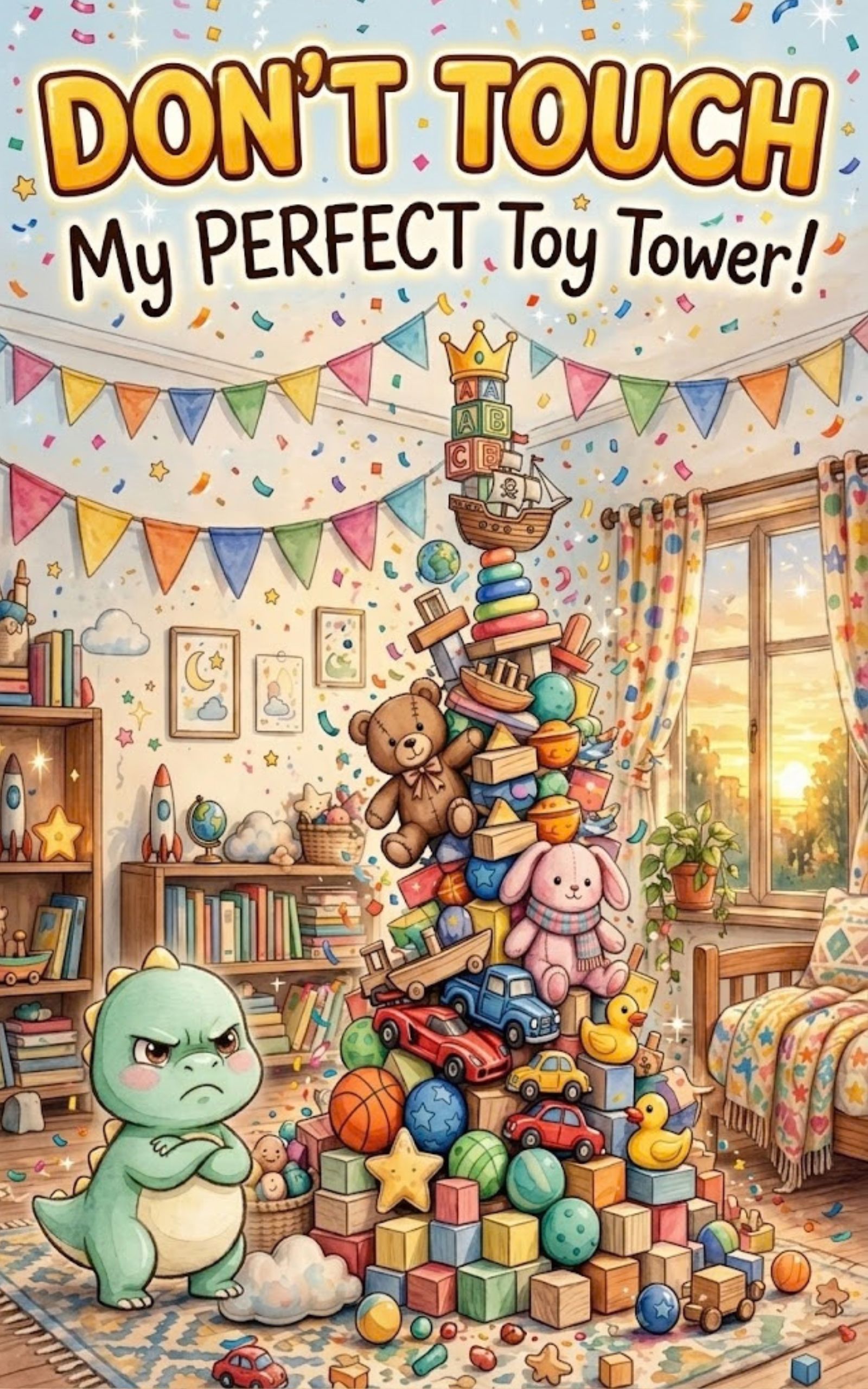
Don't Touch My PERFECT Toy Tower!
Dodo built the perfect tower.
Explore This Story Join Story Club
Big Feelings
It's 5:47 p.m. Your child has spent forty minutes building a magnificent tower. Blocks, cars, a stuffed bear on top. You say the one sentence that ruins everything: "Time to clean up."
"DON'T TOUCH!" they shout, throwing themselves across the tower like a tiny security officer. Ten minutes later, there are tears, a wobbling tower, and toys scattered further than when you started.
The refusal is not defiance for its own sake. To your child, that tower is not a mess. It is forty minutes of work, a plan that finally worked, and something they are proud of. Asking them to take it apart on the spot can feel like asking them to throw their own work away.
Respect the creation before you reset the room. Photograph the tower first, then turn tidying into a game: a colour hunt, beat-the-song, or a delivery truck. Give everyone one small job, do it together, and stop while it is still fun.
Three things stack up against a small child at cleanup time, and none of them is laziness.
First, the creation matters. A tower, a train track, a row of animals lined up just so — your child remembers every decision that went into it. When a grown-up sees clutter, the child sees the thing they made. Taking it apart without a pause feels like the work never counted.
Second, the task feels huge. "Clean up the room" is one sentence to us and a mountain to a three-year-old. A job with no visible beginning is easy to refuse and hard to finish.
Third, transitions are hard, especially when tired. Cleanup usually lands in late afternoon, when patience is thinnest. The tears are often tiredness wearing a tidy-up costume.
Once you see it that way, the fix is not a louder instruction. It is a smaller job, a visible ending, and a moment of respect first.
Before a single block moves, stop and admire the build. Ask what it is called. Then take a photo together.
This takes thirty seconds, and it changes the negotiation. The tower is not being erased; it is being kept: "Let's keep a photo, and build an even bigger one tomorrow."
Some families keep a little album of builds — on the phone, or printed on the fridge. When a child knows the creation survives as a picture, letting go of the blocks gets easier.
If your child still guards the tower after the photo, don't wrestle it. Say, "The photo is safe. We'll tidy the rest first, and the tower last." Often, once the rest of the room is done, the tower goes without a fight.
A game works when the rules are clear, the job is small, and it ends. Pick one game per cleanup, not all three at once.
1. Colour hunt. "All the red things first! Now blue!" One colour at a time turns a mountain into tiny wins. Children who freeze at "clean up everything" can usually manage "find the red ones." Count them as they go in.
2. Beat the song. Put on one short song your child loves — two or three minutes, no more. The job is to tidy until the song ends. When the music stops, tidying stops, whatever is left. The deadline is the song, not you, so there is nobody to argue with. Over a week, the same song becomes the signal, and children start tidying before you even ask.
3. Delivery truck. A box, a basket, or a toy truck becomes the delivery vehicle, and every toy needs a ride home. "The cars go to the garage shelf. The animals go to the farm box." Driving each load across the room turns carrying into play, and sorting happens without anyone saying the word "sort." Let your child drive.
Keep it short: five minutes of a game that ends well beats twenty that collapses into tears. Stop while it is still fun.
Children tidy best when the grown-up is tidying too. Sit on the floor, take your own small job, and narrate it lightly: "I'm doing the books. You're doing the cars." Just two people doing the same kind of work.
Give one job at a time, not three. "Cars in the box" is a job. "Clean the room" is not. When the job is done, name it and move on: "Cars done. What's next — animals or blocks?" Letting them choose the next job gives them a say without reopening the whole negotiation.
The phrases that help are the ones that describe, not order. Try "The blocks live on this shelf — shall we drive them home?" instead of "Pick those up right now." Try "One more load, then we're done" instead of "Hurry up, dinner's ready." To a child guarding a tower, that is the difference between being told off and being invited in.
Photograph the build together and name it. Then play one game — colour hunt, beat-the-song, or delivery truck — for five minutes, one small job each, side by side. Stop when the song ends or the colour is done.
Three common moves make cleanup harder, even when they feel efficient in the moment:
If tonight goes badly, photograph the tower, tidy what you can, and try again tomorrow.
In DON'T TOUCH My PERFECT Toy Tower!, Dodo builds the most perfect tower — then stands guard over it like a tiny security officer: "DON'T TOUCH!" But this is no ordinary picture book. When you shake, tilt, pat, and turn the pages, Dodo's perfect world wobbles. The tower tumbles, and what comes next is the best part: cleaning up together, because the best towers are the ones we rebuild side by side. Ages 2–5.
Find it here: DON'T TOUCH My PERFECT Toy Tower! (all book links on this site go through our book pages to Amazon).
Read it before cleanup, not during the argument. A story read calmly, earlier in the day, gives your child Dodo's picture of tidying — and when cleanup time comes, you can borrow his line: "What would Dodo do with the tower now?"
Keep the job smaller, don't drop the routine. One colour only, or one song only, and you do the first load together. If the tower itself is the sticking point, tidy everything else first and leave the tower last — by then, the room is nearly done and the ending is easier to accept. If tears come anyway, pause the game and comfort first; a child who feels heard tidies sooner than a child who feels overruled. Most children settle into the routine within a week or two, once they learn that the photo always comes first and the game always ends.
Shrink your part too. Pick one job for yourself and one for your child, and stop when theirs is done — even if the room isn't perfect. A half-tidy room with a child who helped is a better result than a perfect room that taught them cleanup isn't theirs. Over time, add one more job, not five. The habit grows by staying small enough to finish.
Then the problem may not be the routine — it may be the volume. Try rotating: keep a smaller set out, box the rest, and swap every week or two. Fewer toys out means a smaller mountain, a faster game, and toys that feel new again when they rotate back in. Let your child choose what stays out this week; choosing is part of owning the room.
Keep going: For more on the other end of the day, read Why Won't My Child Wind Down at Bedtime? A Bouncy-to-Calm 10-Minute Routine — or browse the Storytime Journal for more. Coming Nov 18: "When Little Worries Grow Big: Talking With Your Child About 'What If…?'"
Free to try: Browse our Free Resources page for printables to try at storytime, including worksheets your child can colour and complete.
Stay in the loop: Join the Story Club for one gentle story idea each week.
Ages 2–5 yearsDodo built the perfect tower.
Explore This Story